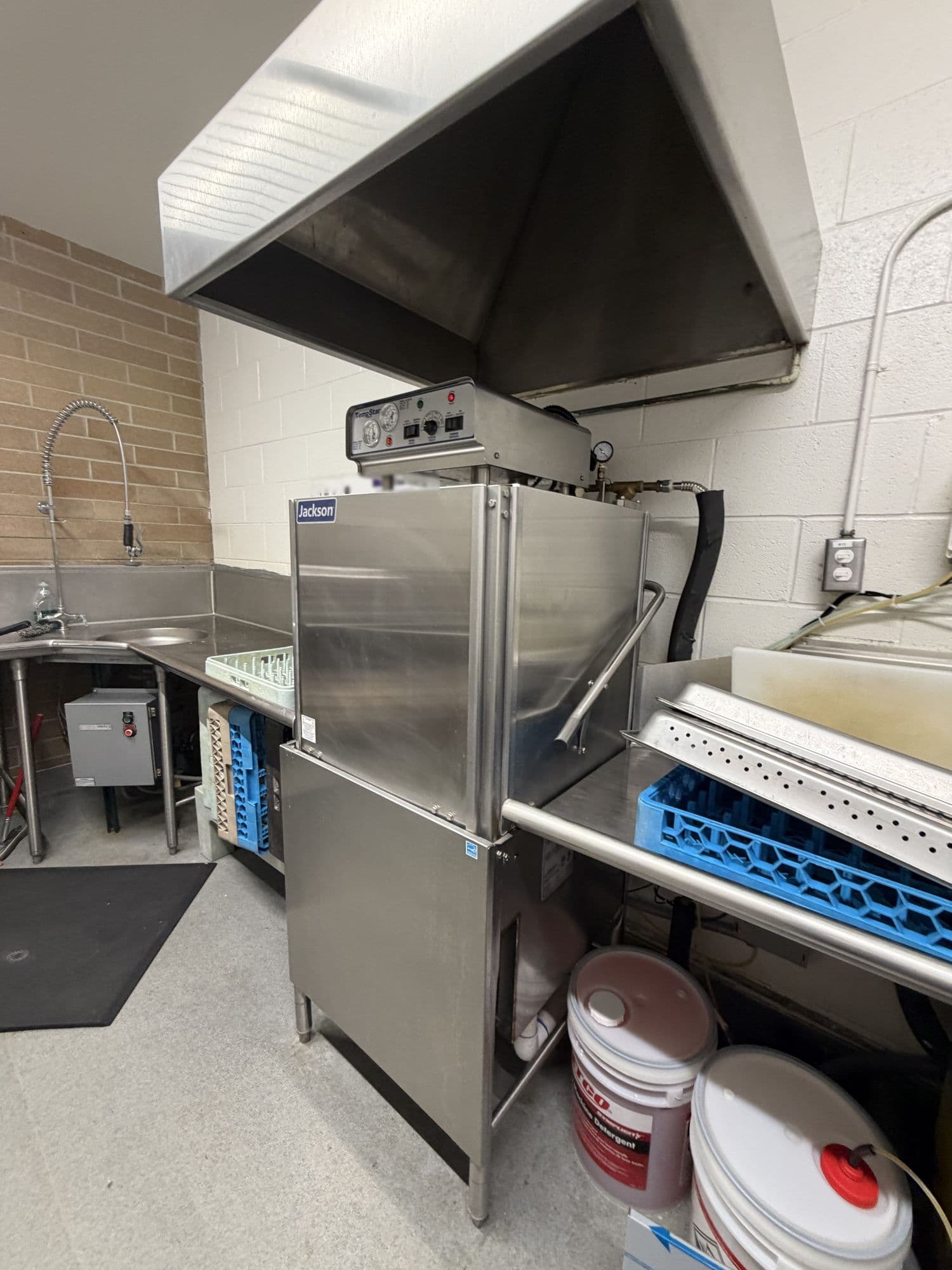
Short answer: A high-temperature dish machine must deliver a final sanitizing rinse of at least 180 °F at the manifold for most models (165 °F for single-temperature stationary rack machines), with 160 °F measured at the dish surface. A low-temperature (chemical) machine must hold the right sanitizer concentration, commonly 50 ppm for chlorine, at the minimum water temperature the code sets for that concentration and pH. If your readings miss, the dishes are not sanitized and the machine needs service, not a longer cycle.
Health inspectors look at the dish machine on almost every visit, and it is one of the easiest places to lose points. The numbers come from the FDA Food Code, which most states, including Idaho and Oregon, adopt in some edition through their health departments. I'm Jason Hodges, owner of Meridian HVAC & Refrigeration. This post covers the temperatures in plain terms, how to test them, and the equipment problems that cause failures.
Two kinds of sanitizing
Commercial dish machines sanitize one of two ways:
- High-temperature (hot water) machines use water heat. A booster heater raises the final rinse water to sanitizing temperature.
- Low-temperature (chemical) machines use a chemical sanitizer, typically chlorine or quaternary ammonium, injected into the final rinse.
You can tell which you have from the data plate and by looking for a booster heater and a chemical feed line. The code treats them differently, so first confirm which kind you own.
The numbers: high-temperature machines
The Food Code sets minimum temperatures by machine type. The values below are the ones in the FDA Food Code, section 4-501.112, as I read it. Check the data plate and your health district's adopted edition too.
| Machine type | Wash temperature (minimum) | Final sanitizing rinse |
|---|---|---|
| Stationary rack, single temperature | 165 °F | 165 °F |
| Stationary rack, dual temperature | 150 °F | 180 °F |
| Single tank, conveyor | 160 °F | 180 °F |
| Multitank, conveyor | 150 °F | 180 °F |
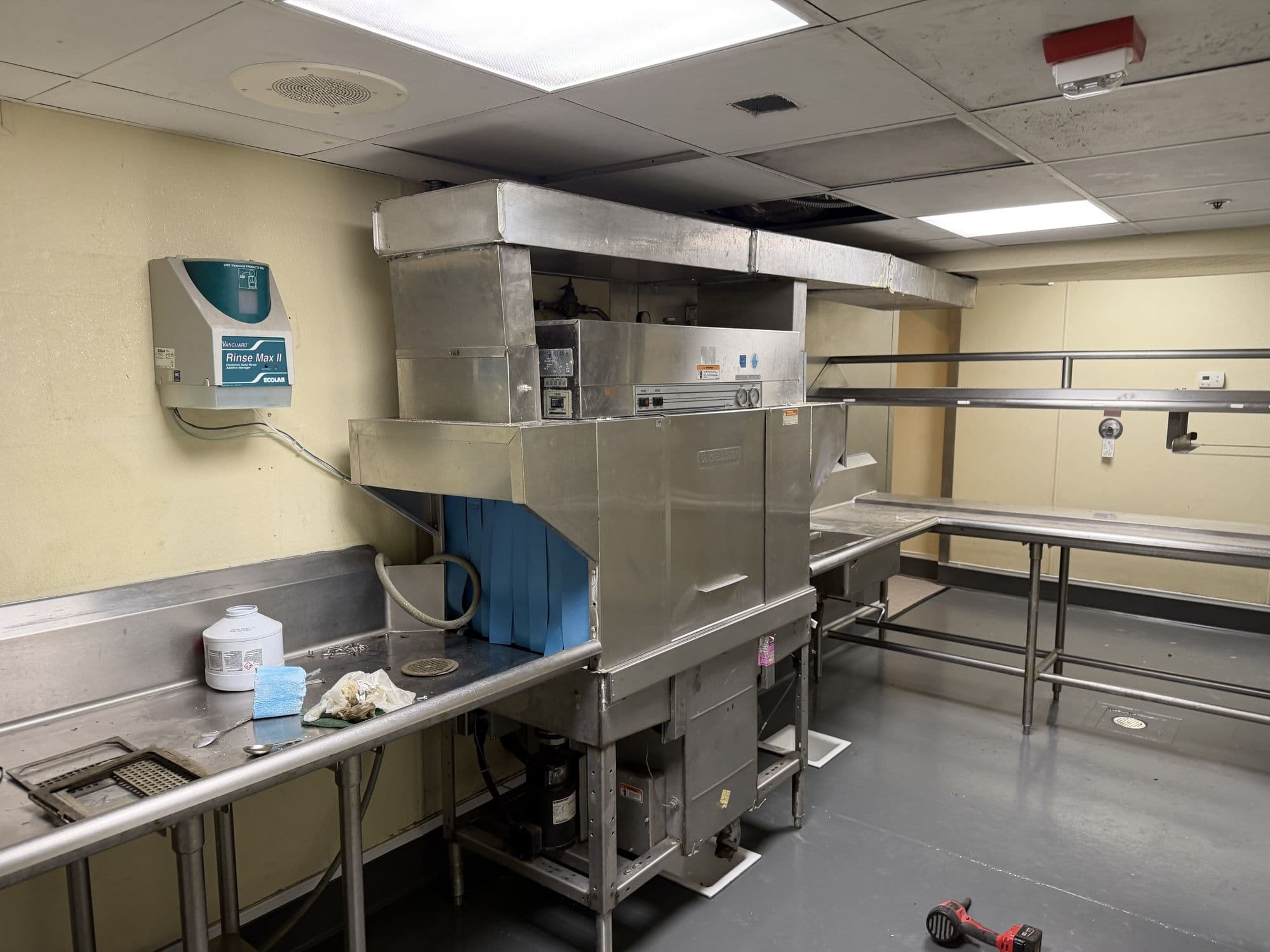
Two details that matter in practice:
- The final rinse temperature is measured at the manifold (the pipe that feeds the rinse spray arms). The Food Code sets the minimums in the table and a maximum of 194 °F there. Going far above the minimum wastes energy and can create steam problems.
- The 160 °F surface temperature is the sanitizing target at the dish, which is why a test strip or thermometer that reads dish surface temperature is the real check.
The final rinse pressure also matters. The Food Code calls for the flow pressure of the final rinse to be within the range the manufacturer states, commonly 15 to 25 psi. A pressure reading that is low means a weak rinse, even if the temperature is correct.
The numbers: low-temperature (chemical) machines
For chemical sanitizing, the Food Code looks at three things together:
- Wash temperature. The code requires at least 120 °F for the wash cycle on a chemical machine, or whatever the manufacturer specifies if higher.
- Concentration and temperature. For chlorine, the minimum water temperature depends on concentration and pH: at 50 ppm, the Food Code table calls for at least 75 °F at pH 8 or below, or 100 °F at pH 10 or below. Contact time follows the manufacturer and the code. For quaternary ammonium, follow the label.
Use test strips designed for the sanitizer you use. Quats and chlorine strips are not interchangeable, and a strip past its expiration date will give wrong readings.
How to test, and how often
- Check the gauges. The wash and rinse thermometers on the machine are required, and they should read within the limits during a cycle.
- Verify with a second instrument. A calibrated probe thermometer or a surface-temperature test device (a labeled maximum-registering thermometer or temperature-sensitive label) is how inspectors confirm.
- For chemical machines, run a test strip in the rinse and compare it to the chart.
- Make it routine. Test at opening, at mid-shift when the machine is loaded, and any time you change chemicals. Keep a log; inspectors look at it.
Common reasons the numbers fail
When a machine keeps missing temperature, these are the usual suspects:
- Booster heater trouble. Scaled-up or failing heating elements, a bad thermostat or high-limit, or a tripped breaker. The wash tank might read fine while the booster can't reach 180 °F.
- Hard water scale. Treasure Valley water is hard. Scale builds up on heating elements, wash arms and nozzles. Heaters work harder and rinse nozzles clog.
- Low incoming hot water supply. Many high-temperature machines need 140 °F incoming water to the booster. A tired building water heater drags down the whole system.
- Clogged or worn spray arms and nozzles. Poor spray means poor cleaning no matter what the temperature reads.
- Chemical feed problems. A chemical sanitizer pump losing prime, an empty jug, a kinked tube or a failed sensor leaves the rinse with no sanitizer. Low-temp machines also depend on a dependable supply of warm water.
- Bad thermostat, gauge or sensor. The gauge can lie. If the machine seems to run fine but inspectors read lower, check the gauge against another thermometer.
- Incorrect wash cycle timing. A timer that is shortened or faulted reduces contact time.
What to do if your machine fails
- Stop using it for sanitizing. If a high-temp machine won't reach the temperature, or a chemical machine can't hold the concentration, the dishes are not sanitized.
- Switch to a backup method you have approved with your health district: for example, a three-compartment sink using sanitizer at the labeled concentration for the required contact time.
- Call for service and have the data plate and recent readings ready. If it is a rental or leased machine, the supplier may share responsibility for the chemical dispenser.
- Log the failure and the correction. Written records show an inspector you handled it.
If you are not sure what applies to your operation, ask your local health district. They set the requirements, and they tend to prefer a call before the failure over an explanation afterward.
Preventing failures
- Descale on a schedule that fits your water. Heavily used machines may need it monthly.
- Clean wash arms, nozzles and strainers every day. Staff can do this in minutes.
- Replace chemical tubing and check the feed on a regular schedule.
- Schedule preventive maintenance for the machine and its booster heater.
- Keep spare parts you know you will need. A gauge, a rinse nozzle set or a feed tube can be the difference between a same-day fix and a closed dish pit.
When to call us
We service commercial dish machines across the Treasure Valley, including booster heaters, spray arms, gauges and the water supply that feeds them, and we can include them in a maintenance plan. Call or text (208) 477-1897 for dish machine repair, or read about our commercial dishwasher repair. We answer 24/7, and for emergencies in the Treasure Valley we aim to have a technician on site within 2 hours (response times can vary with location, weather and call volume).
Source: U.S. FDA Food Code, Chapter 4 (Equipment, Utensils and Linens), sections 4-501.112, 4-501.113 and 4-501.114. Your state or county adopts a specific edition, and local rules can differ. Verify with your health district before relying on any number here.