
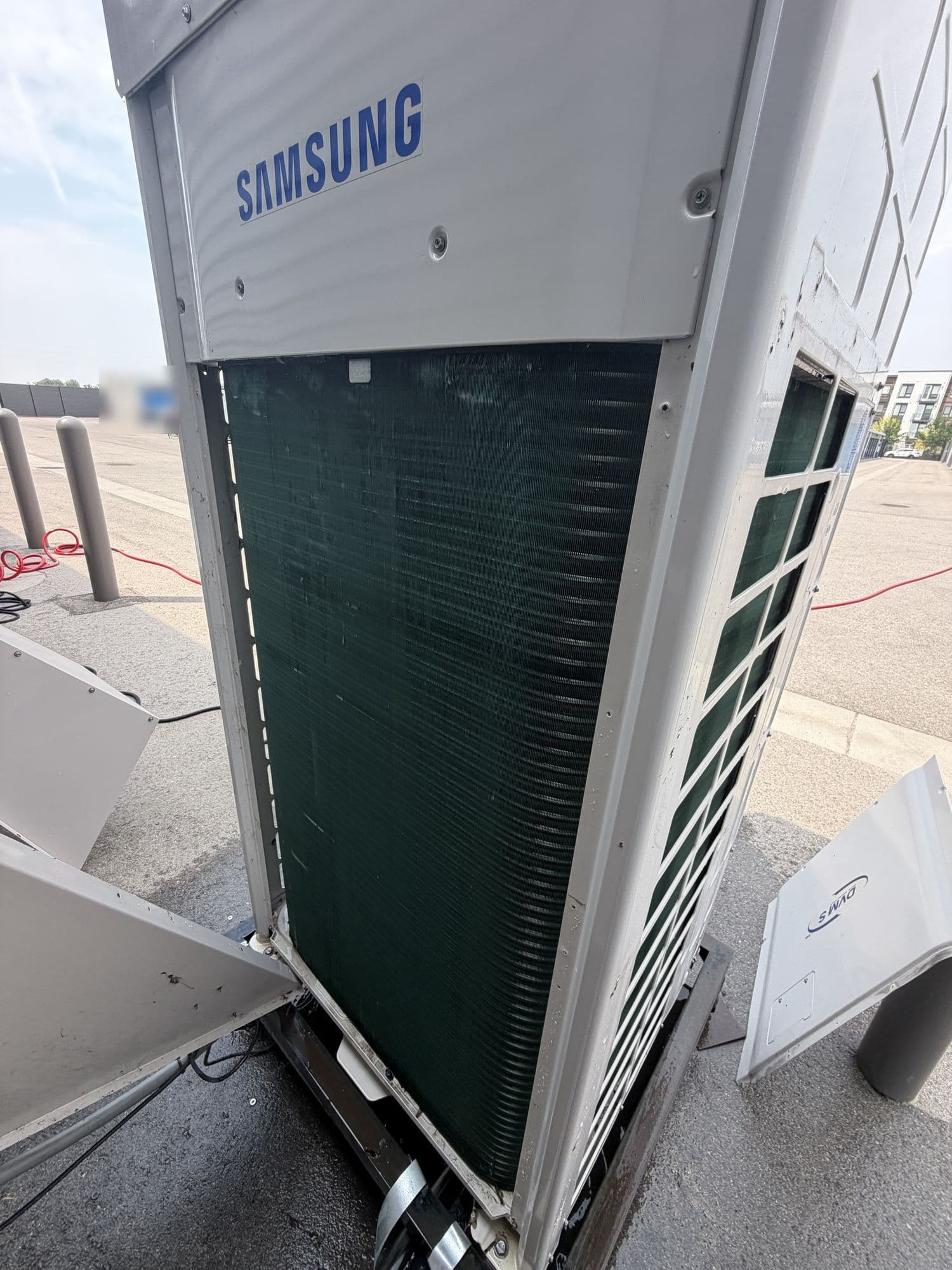
Short answer: A VRF (variable refrigerant flow) system is one or a few outdoor units that feed many indoor units through a network of refrigerant piping, each zone with its own control. For a property manager, the upside is zoning and efficiency. The tradeoff is that the system is more specialized to service: refrigerant piping, branch controllers and communication wiring all matter, and an untrained repair can cause bigger problems than the original fault. Know what you own, who services it, and how the controls are set up.
If you manage an office building, a medical suite, a hotel or a mixed-use property, you will probably run into a VRF system sooner or later: in a renovation, at a tenant space that has one, or in a bid for new construction. I'm Jason Hodges, owner of Meridian HVAC & Refrigeration. This is the plain-language version of what a VRF system is, how it differs from the rooftop units most local buildings have, and what to ask your mechanical contractor.
What VRF means
VRF stands for variable refrigerant flow. Instead of a single large unit pushing air through ductwork to the whole building, a VRF system uses:
- Outdoor units (condensing units) with variable-speed compressors.
- Indoor units in each room or zone: wall-mounted, ceiling cassettes, ducted or floor-mounted.
- Refrigerant piping that connects them. The system moves refrigerant, not chilled water or ducted air, to each space.
- Controllers: a local controller or thermostat in each zone, plus a central controller or building management interface.
Because the compressors modulate, the system supplies only as much heating or cooling as each zone calls for. That is the "variable" in the name.
Heat pump vs heat recovery
There are two common configurations:
- Heat pump (2-pipe) systems. The whole system is in cooling or in heating at one time. Simpler piping, lower first cost, good where all zones usually want the same thing.
- Heat recovery (3-pipe) systems. Some zones can heat while others cool. The system moves heat from where it isn't needed to where it is, using branch selector boxes (sometimes called BS or heat-recovery boxes). Good for buildings with mixed loads, like an interior server room next to a sunny perimeter office.
Which you have changes how it is serviced. Heat recovery systems add boxes, valves and sensors that need attention.
How VRF differs from rooftop units
| Rooftop unit (RTU) | VRF | |
|---|---|---|
| Distribution | Ducted air from a roof or ground unit | Refrigerant piping to indoor units in each zone |
| Zoning | Usually one or a few zones per unit | Individual control per room or zone |
| Roof/mechanical space | Roof or ground footprint, large ductwork | Smaller outdoor units, small pipe runs, less duct |
| Failure mode | One unit failure affects the whole zone it serves | One indoor unit can fail without losing the building; an outdoor unit or piping fault can affect many zones |
| Service | Widely known, parts widely available | Needs trained technicians, manufacturer tools and software |
| Tenant billing | Typically by area or whole-building | Possible with sub-metering and controls, which require setup |
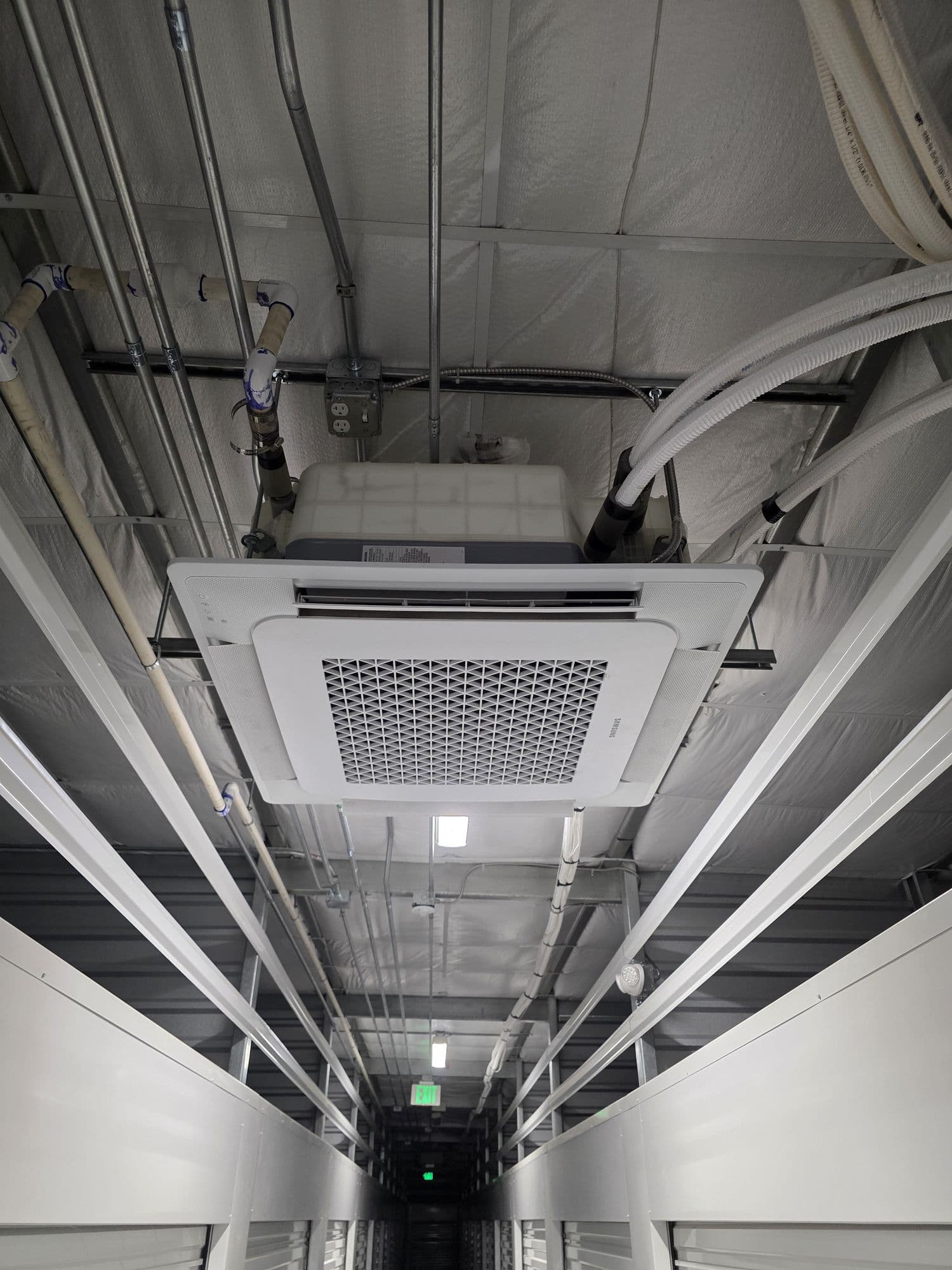
Neither is better in every case. RTUs are simple, familiar and often the lowest-cost choice for a flat roof with open floor plans. VRF fits renovations where ductwork is hard to add, buildings with varied tenants and loads, and sites that value comfort control by room.
What a property manager should ask
Before you approve or inherit a VRF system:
- Who is the manufacturer, and who is authorized to service it? Some manufacturers require training or software to commission and diagnose. Ask your contractor what they have.
- Is there a maintenance plan, and what is in it? Ask which units and controls it covers, how each visit is documented, and how extra work is quoted before it's done.
- How is refrigerant managed? VRF systems hold more refrigerant in more joints and runs than a typical split system. Ask about leak detection, the code requirements for the space, and who handles the records.
- Where is the control and monitoring? Know who has the passwords, what the central controller shows, and who gets alarms.
- What are the spare parts and lead times? Boards and specialty parts may not be on a local shelf.
- What are the tenant operations? Who adjusts set points, who can lock them, and how is after-hours use tracked.
- What's the warranty? Many warranties depend on documented maintenance and commissioning.
Maintenance that matters for VRF
Maintenance on VRF is more than a filter swap. A good visit covers the indoor units and their drains, the outdoor units, the refrigerant circuit and the controls and communication between them, cleaned and documented. Ask your contractor to review the system's error history too: a VRF system running with a small fault often looks normal to occupants, and the history is where it shows up before it takes down a zone.
Common problems
- Water leaks from indoor units, usually from a blocked condensate drain or a failed drain pump.
- A zone not heating or cooling, from a failed sensor, a communication fault, a closed or stuck valve or a refrigerant issue.
- Error codes on an outdoor unit. These vary by brand and often point to a category of fault, not a part. A technician with the right manual or software interprets them.
- Noise or vibration, which can mean loose piping, a failing fan or a refrigerant flow issue.
- Short cycling or reduced capacity, from dirty coils, a refrigerant leak or a control problem.
Do not let someone who isn't familiar with the system "just add refrigerant." A VRF charge is calculated for the whole piping network, and a wrong charge can reduce capacity and damage compressors.
Planning for replacement and budgeting
VRF equipment can last a long time with proper maintenance. For budgeting, track the install date, the manufacturer, the model and serial numbers of outdoor units, and the refrigerant type. Refrigerant regulations are changing, and that affects parts and service planning for older systems. Ask your contractor about the refrigerant in your system and what is planned for it.
Work with a contractor who knows the system
A VRF system is a good fit for some buildings and a headache in others, and much of the difference is who maintains it. Meridian HVAC & Refrigeration provides commercial HVAC service across the Treasure Valley, including VRF and ductless systems, and offers maintenance plans with priority dispatch. If you manage a building with VRF, or are weighing it for a project, call or text (208) 477-1897, or see our commercial HVAC service page. We answer 24/7. Emergency calls typically get a technician on site within 2 hours. Response times can vary with location, weather and call volume.