
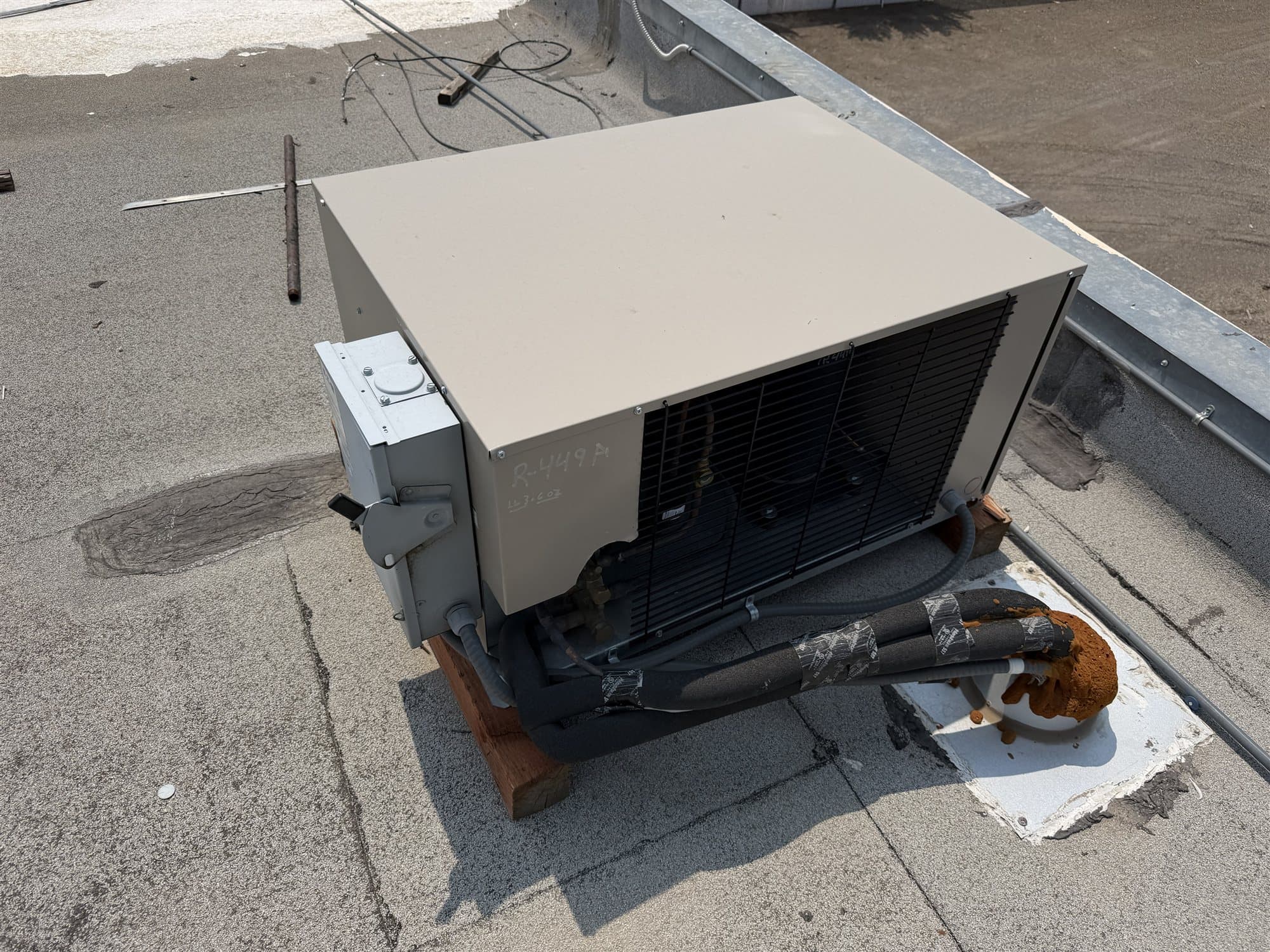
Short answer: Repair a walk-in cooler when the box is sound and one part has failed. Start pricing a replacement when the box itself is breaking down (wet panels, a failing floor, frost inside the walls) or when an old condensing unit needs a new compressor. Most walk-in cooler repair or replace decisions come down to which half of the system is worn out.
Hello, Treasure Valley! I'm Jason Hodges, owner of Meridian HVAC & Refrigeration. When a walk-in starts running warm, owners ask me "fix it or replace it?" The answer depends on what failed, how old the box and condensing unit are, and whether the box itself is still sound. Here are the checks I make on a service call in Boise, Meridian or anywhere in the valley.
First question: is it the box or the refrigeration system?
A walk-in cooler is really two things:
- The box: insulated wall and ceiling panels, the floor, the door, gaskets and heaters.
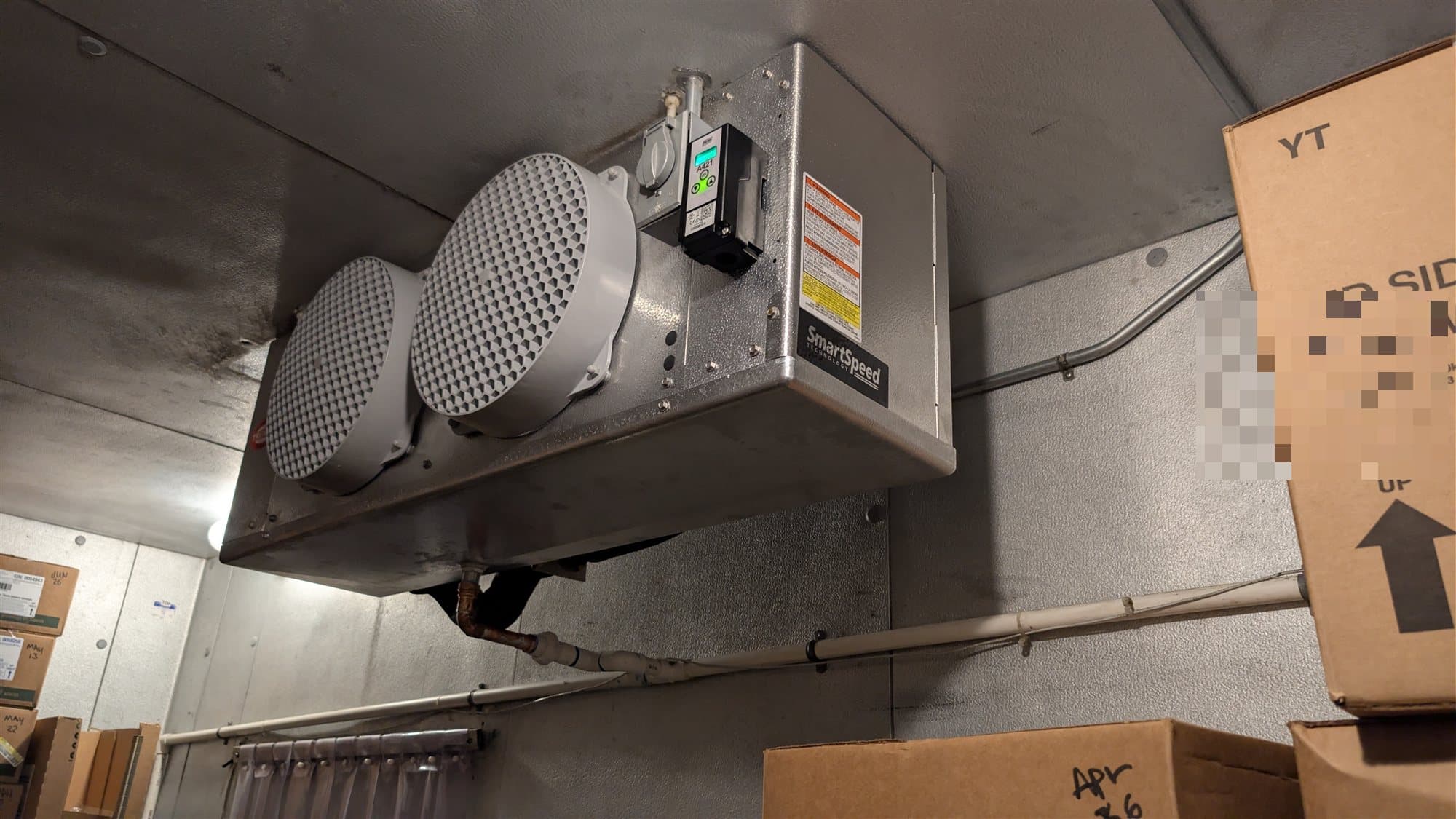
- The refrigeration system: the condensing unit (compressor, condenser, fan) outside or on the roof, plus the evaporator coil, fans and controls inside.
Each half wears out on its own schedule. A dry, tight box can outlast more than one condensing unit, and a new condensing unit can't save a box with soaked insulation. Figure out which half is failing first.
Age of the box and the condensing unit
Check the data plates. The condensing unit plate shows the model, and the serial number, which often encodes the build date. The box usually has a tag inside the door frame.
Manufacturers such as KPS Global put the typical life of a walk-in at 10 to 15 years, depending on conditions. Age alone decides nothing, though. A condensing unit that has run for years on a dirty coil on a hot roof is more worn than its age suggests. Age matters most when it lines up with a major failure: an old unit that needs a compressor is a different conversation from one that needs a contactor.
Compressor or a smaller part?
Most service calls for a warm walk-in are not the compressor.
Small parts that are usually worth repairing
- Evaporator or condenser fan motors
- Contactors and capacitors
- Defrost timers, heaters and termination switches
- Thermostats and controllers
- Expansion valves (TXVs) and solenoid valves
- A refrigerant leak that can be found and fixed
These are normal wear items, and replacing one on a sound system is a standard walk-in cooler repair. Our walk-in cooler and freezer field manual explains how several of these failures show up.
When the compressor fails
A failed compressor is where repair-or-replace becomes a real question. First, a technician should confirm the compressor is truly bad (not a start component or contactor) and find out why it failed. Compressors usually die from something else: a dirty condenser, a refrigerant leak, liquid returning from the evaporator, or an electrical problem. If the root cause isn't fixed, a new compressor can fail the same way.
If the condensing unit is young and the cause is found, replacing the compressor or the condensing unit on a good box is often the sensible repair. If the unit is old, that money may be better put toward planning new equipment.
Panels, floor, doors and ice: checking the box
Panels, insulation and floor
Walk-in panels are foam insulation between metal skins. When moisture gets in through damaged seams or punctures, the foam loses much of its insulating value. Signs include soft or bulging panels, rust at seams, frost or condensation on the outside of the box, and a floor that flexes, cracks or heaves. A heaving floor is especially serious on freezers, where ground moisture under the slab can freeze.
One or two damaged panels can often be replaced. Widespread wet insulation or a failing floor usually points toward a new box.
Door gaskets and heaters
The door takes more abuse than any other part of the box. Torn door gaskets, a sagging door, a missing closer or a failed frame heater all let warm air in. These are small repairs compared with a new box, and a common cause of long run times and frost.
Ice buildup
Where the ice forms tells you what is wrong:
- Ice on the evaporator coil: defrost, airflow, fan or refrigerant problem. Usually a repair.
- Ice around the door frame or on the ceiling near the door: air leaking in through the door. Usually a gasket, heater or door repair.
- Ice or frost inside or between panels: moisture in the insulation. A box problem, and a reason to look at replacement.
Symptoms and what they usually point to
| Symptom | Likely cause | Usually points to |
|---|---|---|
| Box warm, condensing unit running | Dirty condenser, low refrigerant, iced coil, fan motor | Repair |
| Box warm, condensing unit off | Contactor, capacitor, control, tripped safety, or compressor | Repair after diagnosis; compressor may raise the question |
| Ice on the evaporator coil | Defrost failure, evaporator fan, airflow blocked by stock | Repair |
| Ice or frost near the door | Worn gasket, failed door or frame heater, door not closing | Repair |
| Frost or sweat on the outside of panels | Wet insulation, failed panel seams | Box repair or replacement |
| Soft, cracked or heaving floor | Floor or subfloor damage, moisture | Often box replacement |
| Repeated refrigerant leaks on an old unit | Aging piping or coils | Plan for replacement |
Energy cost
A walk-in that runs too long shows up on every power bill. Common causes are a dirty condenser coil, worn gaskets, a door left open, low refrigerant and failing insulation, and most are repairable. Older evaporators often use shaded-pole fan motors that run around the clock; swapping them for electronically commutated (EC) motors is a common efficiency upgrade on an existing box. When the long run times come from wet insulation or a worn-out condensing unit, repairs won't fix the bill, and replacement starts to make sense.
Health inspections and the 41 °F limit
The FDA Food Code (section 3-501.16) requires cold time/temperature-controlled foods to be held at 41 °F (5 °C) or below. Idaho's food code is based on the FDA Food Code, and local health district inspectors check against that limit.
Check the food, not just the dial: probe product in several spots with a calibrated thermometer. If product near the door or on the top shelf is over 41 °F while the display reads fine, you have an airflow, door or capacity problem. A walk-in that can't hold 41 °F on a hot afternoon needs a service call now, not later.
Downtime and product-loss risk
The real cost of a failing walk-in is often the product inside it, not the repair. A system with several emergency calls in one season is telling you something. A planned replacement lets you pick the timing and move product ahead of time; a Friday-night failure doesn't. If your walk-in is borderline, know where product goes if the box fails, and schedule preventive maintenance so small problems are caught early.
When a repair makes sense
A repair is usually the right call when:
- The box is dry, tight and the floor is solid.
- The failed part is a fan motor, control, contactor, defrost part, gasket or heater.
- A leak can be found and repaired.
- The condensing unit is not near the end of its life.
- The walk-in holds 41 °F once the repair is done.
Start planning a replacement when the box itself is failing, when an old condensing unit needs a compressor or keeps leaking, or when the box can't hold temperature with the refrigeration working properly.
A walk-in freezer follows the same logic, with less room for error: freezers work harder, and floor and ice problems show up faster.
Call us for an honest assessment
We work only on commercial equipment, and we'll tell you straight whether your walk-in is worth fixing. If it is, we'll repair it. If it isn't, we'll explain why so you can plan. For walk-in cooler repair and commercial refrigeration service in Boise, Meridian, Nampa and across the Treasure Valley, call Meridian HVAC & Refrigeration at (208) 477-1897.