Short answer: If your building has no heat, call us. Staff can check that the thermostat is set to heat and hasn't been changed, and that's it. Leave everything else to a technician. Ignition, gas valves, breakers that trip, disconnects that are off, and anything on the roof need a tech. If anyone smells gas, feels dizzy or has a headache near the equipment, or a carbon monoxide alarm sounds, get everyone out and call 911 and your gas utility.
The first real cold morning in the Treasure Valley always brings a round of calls. A rooftop unit that cooled fine all summer has to fire its gas heat for the first time in months, a unit heater in a shop has sat idle since March, or a makeup-air unit in a kitchen is blowing cold air into a room full of cooks. I'm Jason Hodges, owner of Meridian HVAC & Refrigeration. Here's what to do when a commercial building has no heat, and why most of it should be left to us.
What kind of heat do you have?
- Rooftop units (RTUs) with gas heat are packaged units with a gas burner and a heat exchanger. They're the most common type in strip centers, restaurants and offices. See our post on RTU maintenance and troubleshooting.
- Gas unit heaters hang from the ceiling in shops, warehouses and garages.
- Makeup-air units (MAUs) bring in outside air to replace what kitchen exhaust fans remove. Kitchen hoods depend on them; see our kitchen exhaust and makeup air post. We often find MAUs turned off, or old enough to need attention.
What staff can check
One thing: the thermostat. Make sure it's set to heat (or auto), not off or cool, with the setpoint above room temperature. Check whether a schedule or holiday setting changed. Someone changing a schedule is one of the most common causes of a "no heat" call.
That's it. Then call us.
Why we don't want staff doing more
We see a lot of damage from well-meaning employees trying to fix heating equipment. It nearly always ends up costing the owner more than the original repair.
- Breakers: if a breaker has tripped, call us after the first trip. Breakers trip for a reason, and they almost always trip again.
- Disconnects and gas valves that are off: leave them off. Someone may have shut them for a reason.
- The roof: employees aren't trained for roof work, and we don't recommend anyone go up, especially in ice or frost.
- Flues and vents: never clear a flue or vent yourself. They get hot enough to cause bad burns.
- Lockouts: a gas unit that locks out is protecting you. Resetting it again and again doesn't fix the cause and can let unburned gas build up. If you can see a code without opening a panel, note it for the tech.
Gas, combustion and electrical work is licensed work for good reason.
What a technician looks for
When a gas-fired unit calls for heat, it runs a sequence: the inducer fan proves airflow, the igniter lights, the gas valve opens, and a flame sensor confirms the flame. If any step fails, the unit locks out. Common causes we find:
- a worn igniter or a dirty flame sensor
- a gas valve or gas supply problem
- a blocked flue or failed pressure switch
- a tripped high-limit, which has a cause that needs finding, not just a reset
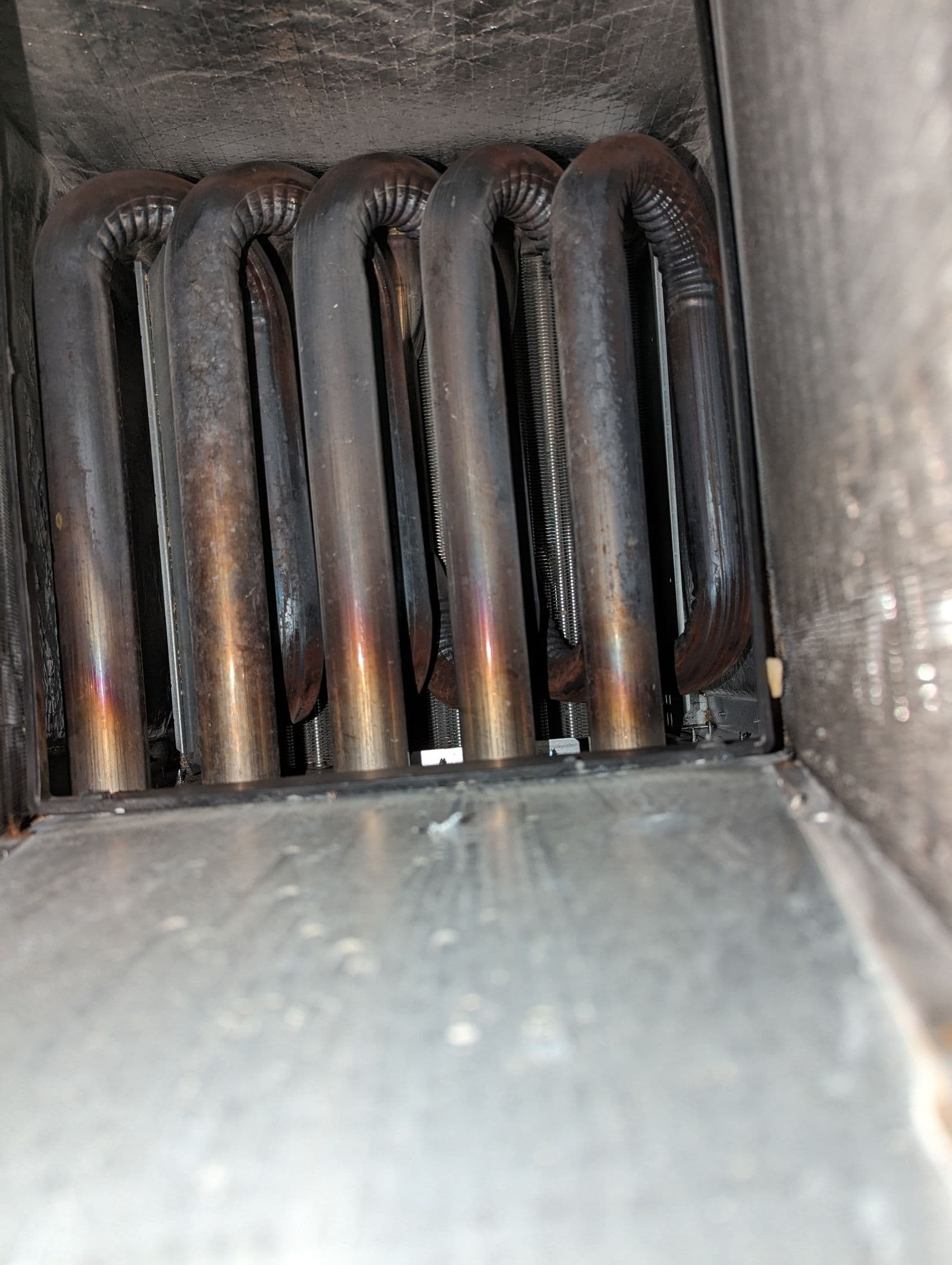
- a cracked heat exchanger, the most serious. It can let combustion gases into the building.
Carbon monoxide: don't skip this
Carbon monoxide (CO) is colorless and odorless. A heater with a damaged heat exchanger or a blocked vent can release it. The CDC lists headache, dizziness, weakness, nausea, chest pain and confusion as common symptoms.
Treat these as emergencies:
- several people with headaches or feeling sick at once, who feel better outside
- a CO alarm going off (don't silence it and carry on)
- soot, scorching or a burning smell around the equipment
- a strong smell of gas: leave immediately, and don't flip switches or use a phone inside
Get everyone out, call 911 and your gas utility from outside, and don't go back in until they say it's safe. Never use ovens, grills or portable fuel-burning heaters indoors to make up for lost heat.
Makeup-air units: two things owners miss
Many older MAUs have no heat at all. They pull straight outside air into the kitchen. In January that means freezing cooks and a hood fighting cold air. If your kitchen gets cold whenever the hood runs, ask us about adding heat to the MAU or replacing it. Cooks notice right away.
Evaporative coolers must be winterized. If your MAU or building has an evaporative (swamp) cooler, it needs to be drained and shut off before the first freeze. Every spring we find units with frozen, cracked pipes that were never drained. If you're not sure yours was done, call us before the next cold night.
Don't wait for the cold snap
Most no-heat calls aren't surprises. They come from units nobody has looked at since last winter. The best time to call is before the first freeze.
With a Meridian HVAC & Refrigeration maintenance plan:
- we fire and check every heating unit before winter, so problems show up on a mild day, not a 10 °F morning
- a full seasonal inspection of your heating equipment, documented
- evaporative coolers are drained and winterized
- you get priority dispatch if something fails anyway
See our maintenance plans, or call to get on the fall schedule.
Know who to call after hours, before you need it. Save (208) 477-1897 in your phone and post it by the thermostat. We answer 24/7.
Call us
Call or text (208) 477-1897 for no heat, a unit that won't light or keeps locking out, a tripped breaker, new noises or smells, or a freeze risk to pipes or product. For non-emergencies, email contact@meridiancool.com. We repair gas rooftop units, unit heaters and makeup-air units across Meridian, Boise, Nampa, Caldwell and the Treasure Valley. See our emergency commercial service page.
Sources: CDC, "Carbon Monoxide Poisoning" (cdc.gov/carbon-monoxide); U.S. Consumer Product Safety Commission carbon monoxide guidance.